
As Australian homes continue to adopt high-powered appliances, electric vehicles, and advanced technology, many homeowners are asking an important question: do you really need 3 phase power at home?
While most residential properties run on single-phase electricity, there are situations where upgrading to three-phase power can improve performance, efficiency, and safety. In this guide, we’ll explain how it works, what the installation involves, and whether it’s the right choice for your home.
What Is 3 Phase Power?
3 phase power is a type of electrical supply that uses three alternating currents instead of one. These currents are evenly spaced, delivering a more stable and consistent flow of electricity.
In comparison:
- Single-phase power uses one active wire
- Three-phase power uses three active wires
This setup allows more power to be delivered efficiently, making it ideal for homes with higher energy demands.
How 3 Phase Power Works
With this system, electricity is delivered across three separate phases. This means power is always being supplied, even if one phase momentarily drops.
The benefits of this system include:
- Smoother energy flow
- Reduced voltage drops
- Improved efficiency for large appliances
- Better load distribution
For households using multiple high-powered devices, this can make a noticeable difference.
Single Phase vs 3 Phase Power
Understanding which supply type suits your home helps determine the best option for your property.
Single-Phase Power
Most Australian homes use single-phase power, which is suitable for:
- Standard lighting
- Household appliances
- Small air conditioning units
- General residential electrical services
3 Phase Power
Three-phase power is better suited for:
- Large homes with high energy demand
- Ducted air conditioning systems
- EV charger installation
- Workshops or home businesses
- Advanced home automation systems
If your current electrical system struggles to handle demand, upgrading may be worth considering.
Benefits of 3 Phase Power for Homes
Making the switch offers several advantages for your home.
Improved Efficiency
Three-phase systems deliver power more efficiently, reducing strain on electrical circuits.
Better Appliance Performance
High-powered appliances run more smoothly and efficiently on three-phase power.
Reduced Energy Loss
With a balanced electrical load, less energy is wasted during transmission.
Future-Proofing Your Home
As technology evolves, homes will require more power. Getting ahead of that demand now prepares your property for whatever comes next.
Why Homeowners are Switching to 3 Phase Power
In the past, this kind of electrical supply was strictly for industrial sites or large commercial workshops.However, modern residential needs are changing. Here are the primary reasons you might consider an upgrade:
1. Large-Scale Air Conditioning
Australia’s climate demands robust cooling. While small split systems run fine on single-phase, large ducted air conditioning units, especially those designed for two-storey homes, often need this type of supply to operate efficiently. A unit running on this supply runs more smoothly, experiences less vibration, and often lasts longer because the motor isn’t straining under a single-phase load.
2. High-Speed EV Charger Installation
This is perhaps the biggest driver for residential upgrades today. While you can charge an electric vehicle (EV) from a standard wall socket, it is incredibly slow. A dedicated EV charger installation allows for much faster speeds. However, a single-phase home is usually limited to a 7kW charger. If you have multiple EVs or want a 22kW home charger, the upgrade becomes an absolute necessity.
3. Solar Energy and Battery Storage
If you are planning a massive solar array (above 5kW or 6kW), many energy distributors in Australia will require you to make this switch to manage the export of electricity back to the grid. Furthermore, integrating advanced solar battery storage systems across three phases allows you to power heavier loads during a blackout and provides better balance for your energy consumption.
4. High-End Kitchen Appliances and Workshops
Induction cooktops, steam ovens, and high-capacity instantaneous hot water systems draw significant current. If you’re a hobbyist with a home workshop featuring heavy-duty lathes, saws, or welders, single-phase power will likely trip your breakers constantly.
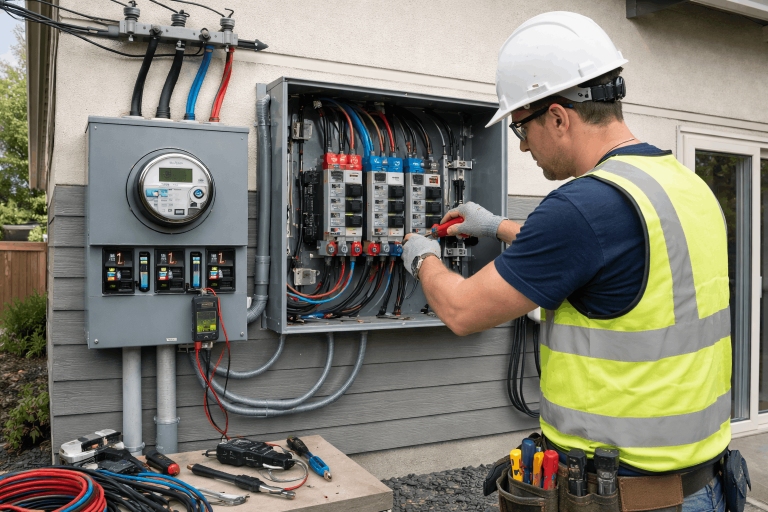
Installation Process for 3 Phase Power
This kind of upgrade requires licensed, professional electrical services.
Step 1: Assessment
A licensed electrician evaluates your current electrical system and energy usage.
Step 2: Application Approval
Your electricity distributor must approve the upgrade.
Step 3: Switchboard Upgrade
Most homes require a modern switchboard capable of handling the increased load
Step 4: Installation
The electrician installs the necessary wiring and connections.
Step 5: Testing and Compliance
All work is tested to ensure it meets Australian electrical standards.
Costs of Upgrading to 3 Phase Power
The cost of this upgrade varies depending on:
- Property location
- Existing infrastructure
- Switchboard upgrades
- Energy provider requirements
While the upfront cost can be significant, the long-term benefits often outweigh the investment for high-demand households.
Safety Considerations
Electrical upgrades should always be handled by licensed professionals.
Working with experienced electricians ensures:
- Compliance with Australian Standards
- Safe installation practices
- Proper load distribution
- Reliable system performance
Electrical safety inspections are also recommended before and after installation.
Can Every Home Upgrade to 3 Phase Power?
Not all properties can easily make this upgrade. Availability depends on your local electricity network.
Some homes may require:
- Network upgrades
- Additional infrastructure
- Approval from the electricity provider
A professional electrician can guide you through the process.
Alternatives to 3 Phase Power
If upgrading isn’t feasible, there are other ways to manage energy demand:
- Installing energy-efficient appliances
- Upgrading to LED lighting
- Using smart home systems
- Managing load distribution
However, these options may not fully meet the demands of a high-consumption household.
Is 3 Phase Power Worth It?
For many homeowners, making this upgrade is a smart investment, particularly if:
- You plan to install EV charging
- You’re upgrading your home
- Your energy usage is increasing
- You want to future-proof your property
A professional assessment will help determine if it’s the right solution for your needs.
Upgrade Your Home’s Electrical Capacity with Confidence
Choosing to upgrade can significantly improve your home’s electrical performance, efficiency, and reliability. While not every household needs it, those with higher energy demands will benefit from smoother operation and reduced strain on their system.
If you’re considering an upgrade or want expert advice, Bucks Electrical is here to help. We specialise in switchboard upgrades, electrical installations, and complete residential electrical services across Sydney.
Call 0413 999 692 today to book a consultation and find out if three-phase power is right for your home.


