
Choosing the right lighting for your home affects more than just style. It affects your power bills, comfort, and even safety. One of the most common questions homeowners ask is whether upgrading from halogen to LED downlights is really worth it. When comparing LED lighting with traditional halogen downlights, the differences are more significant than many people realise.
Homes across Sydney’s Eastern Suburbs are increasingly moving away from halogen lighting, and for good reason. Let’s break down how both options perform and which one makes the most sense for modern living.
Understanding the Difference Between LED and Halogen Downlights
Halogen downlights have been around for decades. They produce a warm, bright light but rely on older technology that converts a large amount of electricity into heat rather than light. LEDs, on the other hand, use modern semiconductor technology to generate light efficiently with minimal heat output. When comparing these lighting types, efficiency, lifespan, and safety are the key areas where the differences are most noticeable.
Energy Efficiency and Power Bills
One of the biggest advantages of LED lighting is energy efficiency. Halogen fittings typically use between 35 and 50 watts each. LEDs can produce the same or better brightness using as little as 7–10 watts.
That difference adds up quickly, especially in homes with multiple downlights. An LED lighting upgrade can reduce energy consumption by up to 80%, which is why many homeowners notice immediate savings on their electricity bills.
At a glance, LED downlights offer:
- Up to 80% lower energy consumption
- Noticeably lower electricity bills
- Better efficiency for open-plan homes with multiple fittings
In suburbs like Bondi, Randwick, and Coogee, where lighting is often used extensively in open-plan living spaces, the efficiency gains are hard to ignore.
Heat Output and Safety
Beyond energy consumption, halogen lights generate a significant amount of heat. This can make ceilings warm to the touch and, in some cases, increase fire risk if insulation or wiring is too close to the fitting.
LED downlights run much cooler, making them a safer option for modern homes. Lower heat output also reduces strain on ceiling materials and surrounding electrical components, which is why most residential electrical services now recommend LEDs as the safer long-term choice.
Lifespan and Maintenance
Halogen bulbs generally last around 1,000–2,000 hours, while LEDs can last 25,000–50,000 hours or more.
That means fewer replacements, less time on ladders, and lower ongoing maintenance costs. For multi-storey homes or apartments, this longevity alone justifies the switch.
Light Quality and Design Flexibility
Early LED lighting had a reputation for harsh or overly cool tones. Today’s downlights are far more advanced and offer a wide range of colour temperatures, from warm white through to daylight.
You can also choose dimmable options, beam angles, and fittings that suit both heritage homes and modern interiors. In the LED vs halogen downlights comparison, LEDs now offer equal or better light quality with far more flexibility.
Environmental Impact
LEDs are significantly more environmentally friendly. They use less energy, last longer, and don’t contain hazardous materials found in some older lighting technologies.
Reducing power consumption also lowers household carbon emissions, which is an important consideration for many Eastern Suburbs homeowners looking to make more sustainable choices.
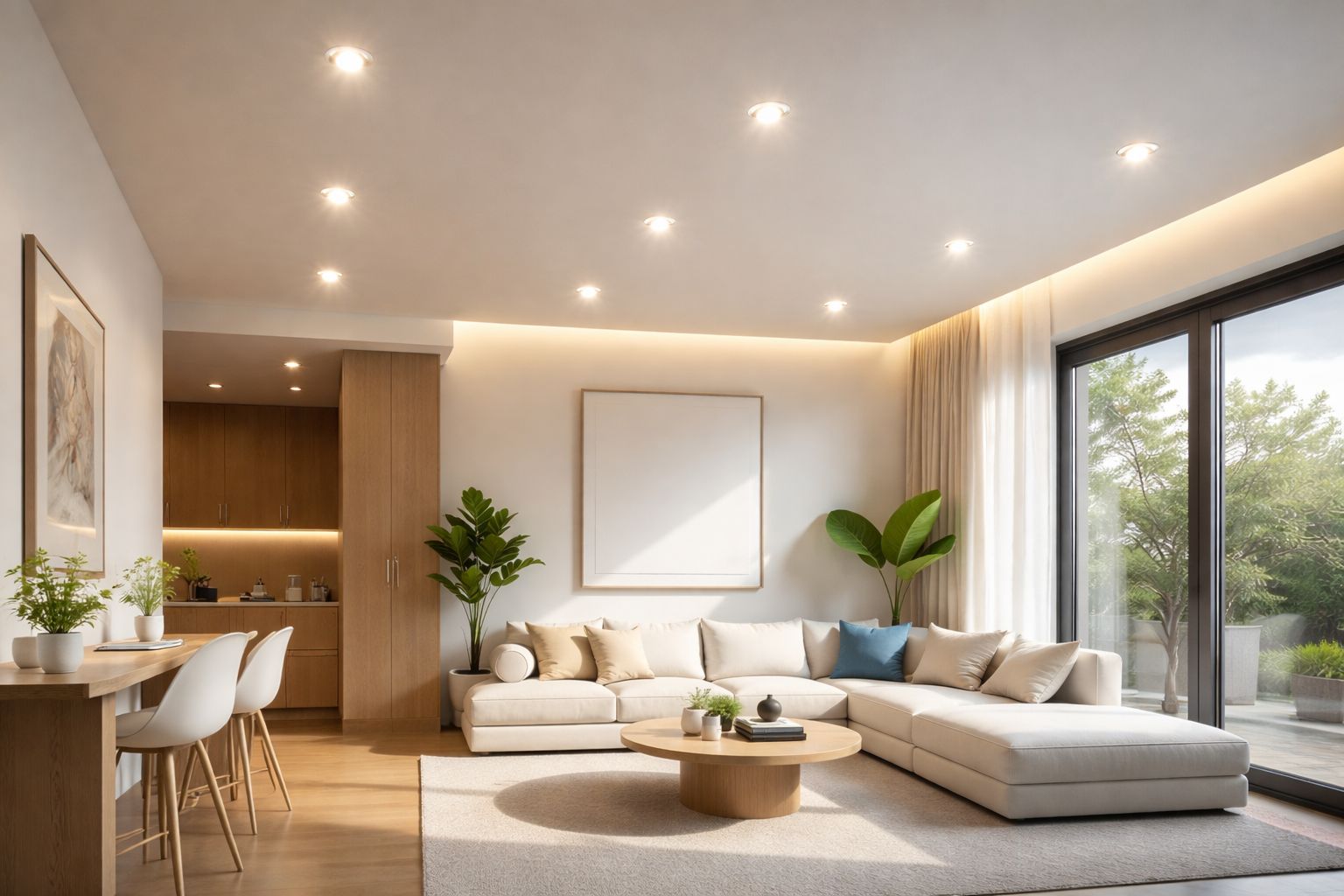
Is an LED Lighting Upgrade Worth It?
For most homes, the answer is yes. Making the switch improves efficiency, safety, and lighting performance while reducing long-term costs. Many properties built before 2010 still rely on halogen fittings that are now outdated and inefficient.
Upgrading also allows electricians to check wiring, insulation clearances, and switchboard capacity, ensuring everything meets current Australian Standards.
Why Professional Installation Matters
While changing a globe might seem simple, a full lighting upgrade involves wiring, insulation clearances, and compliance checks. Licensed electricians providing residential electrical services ensure your lighting is safe, efficient, and built to last. Poor installations can lead to flickering lights, overheating, or shortened lifespan of fittings.


