
Thinking about upgrading your home comfort? Learning how to install a ceiling fan can seem straightforward, but there’s more to it than mounting blades to the ceiling. A properly installed fan improves airflow, reduces energy bills, and enhances year-round comfort.
While some homeowners consider DIY, understanding the electrical requirements and safety standards is essential before getting started.
Why Install a Ceiling Fan?
Ceiling fans are one of the most cost-effective cooling solutions for Sydney homes. They use significantly less power than air conditioning and are ideal for bedrooms, living areas, and covered outdoor spaces.
Benefits include:
- Lower electricity bills
- Improved air circulation
- Reduced reliance on air conditioning
- Year-round functionality with reverse mode
Before getting started with ceiling fan installation, it’s important to assess whether your existing wiring and ceiling structure can support it safely.
What You Need Before Installation
Proper preparation is key.
1. Check the Ceiling Structure
Ceiling fans must be securely mounted to a solid joist or a fan-rated bracket. Standard light fittings are not strong enough to support the weight and movement.
2. Confirm Electrical Capacity
The wiring must be compliant and suitable for the fan motor. In many homes, especially older properties, wiring upgrades may be required before installation.
3. Turn Off Power
Always isolate power at the switchboard before handling any wiring.
Understanding these fundamentals helps clarify why professional ceiling fan installation is often the safer choice.
Step-by-Step: How to Install a Ceiling Fan
Below is a general overview of the process. Electrical work in Australia must be completed by a licensed electrician.
Step 1: Remove the Existing Light Fitting
Carefully disconnect and remove the existing fixture. Inspect wiring for wear or damage.
Step 2: Install a Fan-Rated Mounting Bracket
Secure a heavy-duty mounting bracket directly into a ceiling joist or structural support.
Step 3: Connect the Wiring
Match active, neutral, and earth wires according to the manufacturer’s instructions. If installing a wall controller, additional wiring adjustments may be required.
Step 4: Attach the Fan Motor
Mount the fan body to the bracket and ensure it is balanced and secure.
Step 5: Install the Blades and Light Kit
Attach blades evenly and test the balance. Install any integrated lighting components.
Step 6: Restore Power and Test
Turn power back on and test all speed settings and light functions.
Although this covers the general ceiling fan installation process, electrical compliance laws in Australia require all wiring work to be completed by a licensed professional.
Common Mistakes to Avoid
- Mounting to plasterboard without structural support
- Incorrect wiring connections
- Failing to earth the unit
- Poor blade balance causing wobbling
- Overloading existing circuits
Improper installation can lead to vibration damage, electrical faults or fire risks.
Ceiling Fan vs Air Conditioning
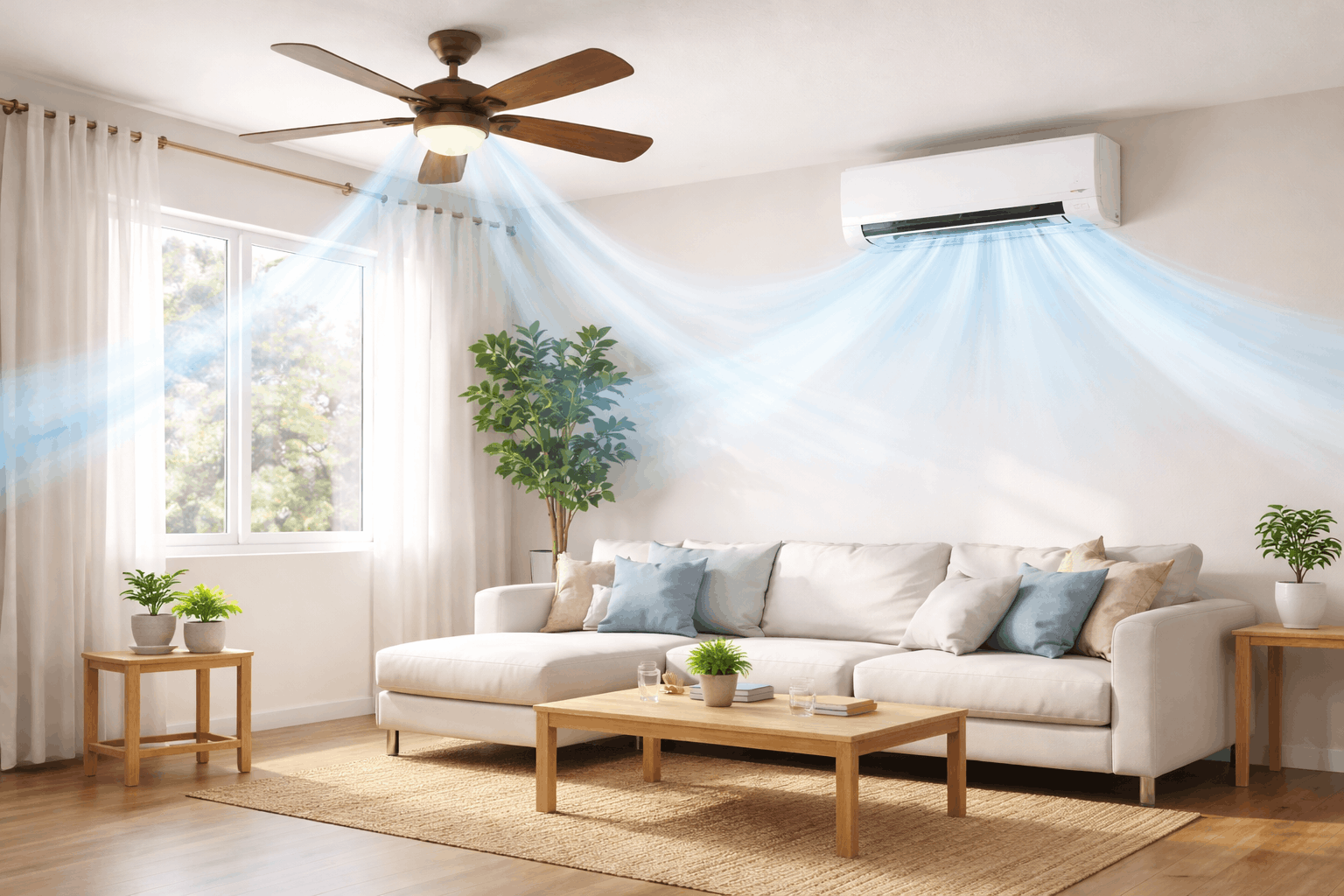
Many homeowners install fans to reduce air conditioning usage. Ceiling fans cost only a few cents per hour to run, making them highly energy efficient.
For best results, fans can complement air conditioning by improving air circulation and reducing thermostat settings. This combined approach enhances comfort while keeping running costs low.
When to Call a Licensed Electrician
Even if you’re confident about how to install a ceiling fan yourself, electrical compliance and safety should never be compromised.
A licensed electrician ensures:
- Safe wiring connections
- Secure mounting
- Proper switch integration
- Compliance with Australian Standards
- Warranty protection
Professional ceiling fan installation guarantees long-term reliability and peace of mind.
Energy Efficiency & Smart Controls
Today’s ceiling fans come with a range of features including:
- Remote controls
- Smart home integration
- DC motors for ultra-low energy use
- Reversible airflow for winter heating efficiency
Upgrading to a newer model can significantly reduce running costs and energy use compared to older fans.


