
When your circuit breaker keeps tripping, it’s more than just an inconvenience. Circuit breakers are designed to protect your home from electrical overloads, short circuits, and potential fire hazards. If they repeatedly shut off power, it’s usually a sign that something in your electrical system needs attention.
Understanding why this keeps happening can help you identify the issue early and avoid more serious electrical problems down the track. In this guide, we’ll explore the most common causes and explain when to call a professional electrician.
What Does a Circuit Breaker Do?
A circuit breaker automatically shuts off electricity when a fault occurs. This safety mechanism prevents overheated wires, appliance damage, and electrical fires.
When a breaker keeps tripping, it means the system is detecting an abnormal electrical condition, such as an overload, a wiring fault, or an equipment problem.
While occasional trips can happen, repeated tripping usually indicates an underlying issue that needs investigation.
1. Overloaded Circuits
One of the most common causes of a tripping circuit breaker is an overloaded circuit. This happens when too many appliances draw power from the same circuit at the same time.
For example:
- Running a kettle, microwave, and toaster on one circuit
- Multiple heaters connected to the same outlet
- Charging multiple high-power devices simultaneously
When the electrical load exceeds the circuit’s capacity, the breaker trips to prevent overheating.
Reducing the number of appliances on that circuit can temporarily help, but professional electrical repairs may be needed if the problem continues.
2. Short Circuits
Short circuits occur when a live wire comes into contact with another wire or grounded metal component. This causes a surge of electrical current, forcing the breaker to trip instantly.
Short circuits can result from:
- Damaged wiring
- Faulty appliances
- Loose connections inside outlets or switches
Electrical fault-finding services can quickly identify the source of the issue and restore safe operation.
3. Ground Faults
Ground faults happen when electricity flows through an unintended path, such as metal pipes or building structures.
This issue often occurs in areas with moisture, including:
- Bathrooms
- Kitchens
- Outdoor power outlets
If the breaker keeps cutting out when you use appliances in these areas, a licensed electrician should inspect the wiring straight away.
4. Faulty Appliances
Sometimes the problem isn’t the wiring but the appliance itself. Faulty heaters, kettles, or air conditioners can draw excessive power or create internal faults.
A simple test is to unplug all appliances and reset the breaker, then reconnect them one at a time to identify the culprit.
Electrical maintenance services can help determine whether the appliance or wiring is responsible.
5. Outdated or Damaged Wiring
Older homes may have wiring systems that weren’t designed to handle modern electricity usage. As homes add more devices, outdated wiring can become overloaded.
Signs of wiring-related issues include:
- Frequent breaker trips
- Flickering lights
- Warm or discoloured outlets and switches
In some cases, house rewiring or switchboard upgrades may be required to handle modern power demands safely.
6. Faulty Circuit Breaker
Although less common, the breaker itself may be worn or damaged. Circuit breakers can deteriorate over time and may trip even when the electrical load is normal.
If the breaker trips repeatedly without any obvious cause, replacing it may solve the problem.
A licensed electrician can test the switchboard and determine whether replacement is necessary.
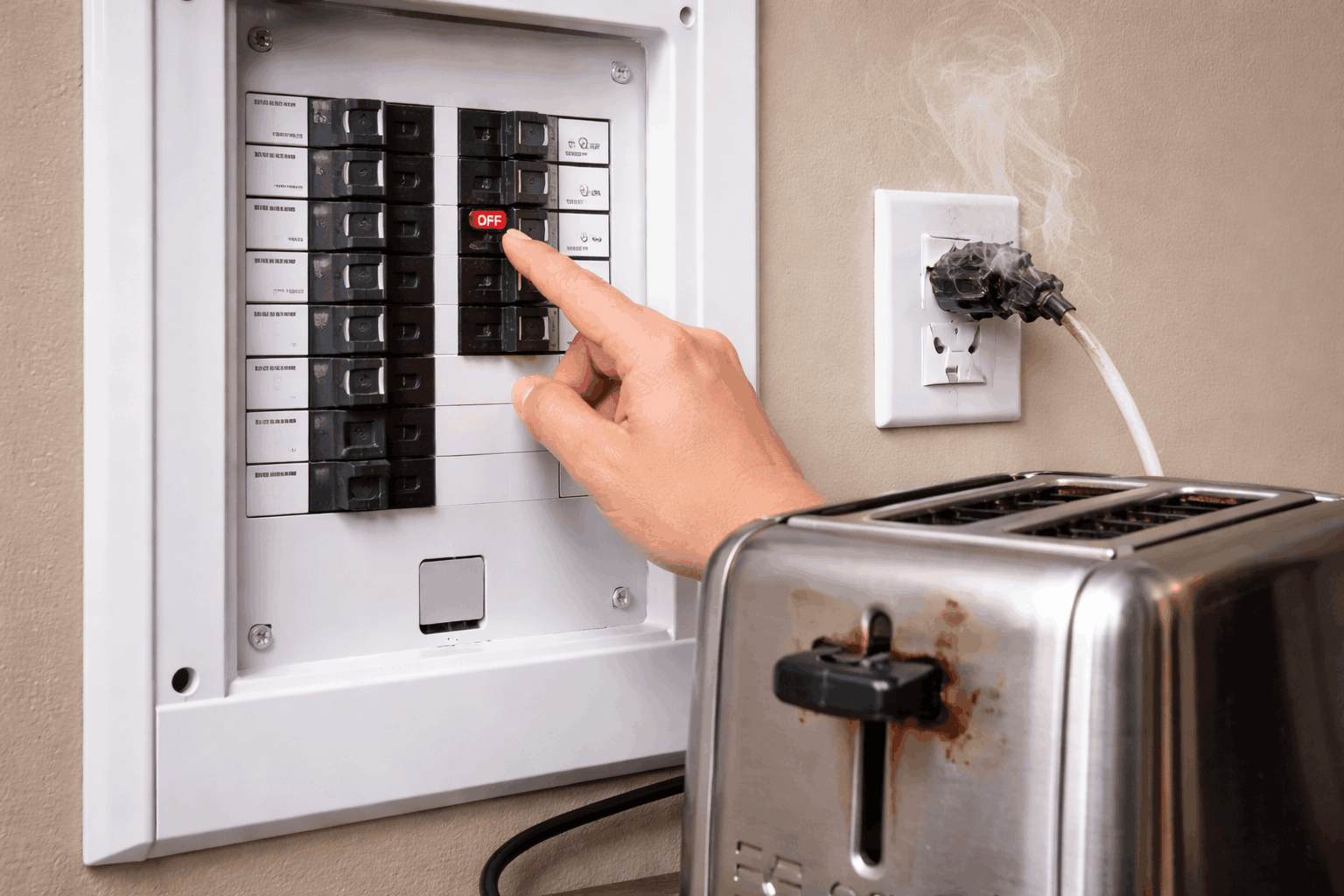
How to Prevent Circuit Breaker Issues
Keeping on top of preventive maintenance can significantly reduce the chances of repeated tripping and unexpected power outages.
Helpful steps include:
- Avoid overloading outlets
- Replace damaged appliances
- Schedule regular electrical inspections
- Upgrade outdated switchboards
- Install RCDs (safety switches) on all circuits for protection against electric shock and ground faults
Professional residential electrical services ensure your electrical system operates safely and efficiently.
When to Call a Licensed Electrician
If your breaker keeps tripping on a regular basis, it’s important to have the system professionally inspected. Ignoring electrical faults can increase the risk of fire, appliance damage, and power failures.
A professional electrician can provide:
- Electrical fault finding
- Switchboard upgrades
- Wiring repairs
- Electrical safety inspections
- Ongoing electrical maintenance
Addressing problems early helps prevent costly repairs later.


