
Imagine walking into a dark room, flipping the switch, and… nothing happens. Or worse, you hear a faint crackling sound or feel a strange warmth behind the wall plate. While we often take them for granted, light switches are the most frequently used electrical components in our homes.
In this guide, we cover everything you need to know about light switch installation and repair, helping you understand when it’s time for an upgrade, how to troubleshoot common issues, and why hiring a licensed professional is the only way to ensure your home remains safe and compliant with Australian standards.
Understanding Your Home’s Lighting Circuit
Before we get into troubleshooting and repairs, it helps to understand how the system works. In a standard Australian residential setting, your lights are connected to a dedicated lighting circuit protected by a circuit breaker or an RCD (Residual Current Device) in your switchboard.
When you flip a switch, you are completing a circuit that allows electricity to flow to the light fitting. Because this involves 230V mains power, any fault in the switch mechanism isn’t just an inconvenience; it’s a potential fire hazard.
Common Signs You Need Light Switch Repair
Knowing when to call a licensed electrician for switch repairs can prevent electrical fires and costly emergency call-outs. Keep an eye (and ear) out for these red flags:
1. Flickering Lights
If your light bulbs flicker when you touch the switch or if they dim sporadically, the internal contacts of the switch may be worn out. While it could be a loose bulb, persistent flickering usually points to a failing switch mechanism.
2. Physical Warmth or Scorching
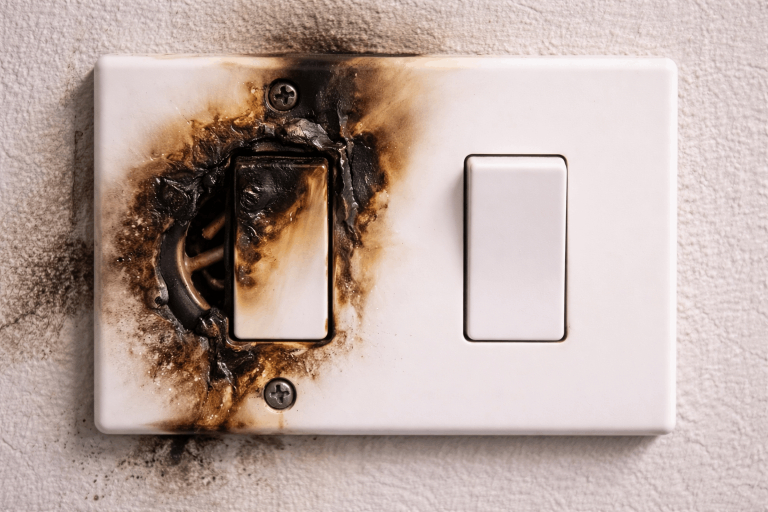
A light switch should never feel warm to the touch. If the wall plate feels hot or if you notice brown discolouration (scorch marks) around the edges, stop using the switch immediately. This indicates “arcing,” where electricity is jumping across a gap, creating intense heat.
3. Strange Noises
Do you hear a buzzing, clicking, or popping sound when you toggle the light? This is a classic sign of a loose wire or a failing mechanical component within the switch housing.
4. The “Spongy” Switch
A healthy light switch should have a firm, snappy click. If the toggle feels “spongy,” gets stuck halfway, or loses its springiness, the internal plastic and metal parts have reached the end of their lifespan.
The Different Types of Light Switches in Australia
Modern switch installation and replacement goes well beyond the standard on/off rocker. Depending on your home’s age and your lifestyle needs, you might encounter several types:
- One-Way Switches: The most common type, controlling a light from a single location.
- Two-Way and Intermediate Switches: These allow you to control a single light from two or more locations (common in hallways or staircases).
- Dimmer Switches: These allow you to adjust the brightness levels. Modern LED dimmers are specialised components that require careful configuration by a licensed electrician.
- Smart Switches: Integrated with Wi-Fi or Bluetooth, these allow you to control your home lighting via a smartphone app or voice command.
- Smart Motion Sensors: Ideal for pantries, walk-in robes, or outdoor security, these turn lights on automatically when movement is detected.
Why Professional Light Switch Installation and Repair is Mandatory
In Australia, specifically under the AS/NZS 3000 Wiring Rules, it is illegal for an unlicensed person to perform “prescribed electrical work.” This includes light switch installation and repair.
The Risks of DIY Electrical Work:
- Safety Hazards: Incorrect wiring can lead to electrocution or electrical fires.
- Insurance Voids: If a fire is caused by unlicensed electrical work, your home insurance provider is likely to reject your claim.
- Compliance Issues: When selling your home, you may be required to provide a Certificate of Electrical Safety (COES). DIY work will not pass this inspection.
- Property Value: Poorly installed switches can lead to “nuisance tripping” of your safety switches, which is a major red flag for building inspectors.
A licensed electrician will test for earthing continuity and polarity, confirming the active and neutral wires are correctly terminated.
The Process: What to Expect During Installation
When you book a professional for light switch installation and repair, the process is systematic and safety-focused:
- Isolation: The electrician will turn off the power at the main switchboard and use a voltage tester to confirm the circuit is dead.
- Assessment: They will check the condition of the existing wiring. In older Victorian homes, this is where we often find degraded “cotton” insulation that requires more than just a simple switch swap.
- Terminal Connection: The wires are stripped and secured into the new switch mechanism. If you are upgrading to a dimmer or smart switch, additional configuration may be required.
- Mounting: The switch is secured to the wall bracket or “C-clip,” and the faceplate is snapped on for a clean finish.
- Testing: The power is restored, and the electrician performs a sequence of tests to ensure the circuit is safe and the switch operates correctly.
Upgrading Your Home’s Aesthetics
Many homeowners opt for a switch upgrade not because of a fault, but to modernise their home’s interior design. Old, yellowing plastic switches can make a freshly painted room look dated.
Modern options include:
- Slimline Plates: Ultra-thin designs that sit flush against the wall.
- Architectural Finishes: Brushed metal, matte black, or even glass-fronted switches.
- Push-Button Mechanisms: A sleek, minimalist alternative to the traditional rocker switch.
Troubleshooting Guide for Homeowners
While you cannot perform the repair yourself, you can troubleshoot to provide your electrician with better information:
- Is it the bulb? Always try a brand-new bulb first.
- Is the circuit breaker tripped? Check your switchboard. If the “Lights” circuit is in the “Off” position, try to reset it once. If it trips again immediately, you have a fault that requires professional light switch installation and repair.
- Is it just one room? If all the lights in the house are out, it is likely a grid issue or a main fuse. If it’s just one switch, the mechanism is the culprit.
Maintaining Your Electrical System
To prolong the life of your switches and reduce the need for frequent repairs or replacements:
- Keep them clean: Use a dry microfibre cloth. Never spray liquid cleaners directly onto a switch.
- Be gentle: Avoid slamming the switch.
- Update your switchboard: A modern switchboard with sensitive RCDs will detect faults in a switch much faster than old ceramic fuses, protecting your family from shocks.
Your Home’s Safety Starts at the Switch
Light switches are the gateway to your home’s comfort and security. Whether you are dealing with a flickering LED, a hot wall plate, or simply want to upgrade to a smart-home setup, understanding the importance of professional light switch installation and repair is the first step. By choosing a licensed expert, you protect your home’s value, your insurance, and most importantly, your family’s safety.


