
Electricity is the lifeblood of the modern Australian home. From the silent humming of your refrigerator to the rapid charging of your smartphone, we rely on a constant flow of energy. However, not all electricity is created equal. If you have ever looked at a power adapter or considered installing solar panels, you have likely encountered the terms AC vs DC power.
Understanding the nuances of AC vs DC power is more than just a scientific curiosity; it is essential for managing your home’s energy efficiency, ensuring the safety of your appliances, and making informed decisions about modern upgrades like EV chargers and battery storage. In this comprehensive guide, we will break down the fundamental differences, the history of the “War of Currents,” and why both systems are critical to your daily life.
The Fundamentals: What is AC and DC?
To understand AC vs DC power, we first need to look at how electrons, the tiny particles that carry an electric charge, actually move through a conductor like a copper wire.
What is AC (Alternating Current)?
Alternating Current (AC) is the type of electricity that delivers power to your home through the main electrical grid. In an AC system, the flow of electrons does not move in a straight line. Instead, it periodically reverses direction.
In Australia, the standard frequency for AC is 50 Hertz (Hz), meaning the current changes direction 50 times per second. This back-and-forth motion is highly efficient for transporting electricity over long distances from power stations to suburban streets.
What is DC (Direct Current)?
Direct Current (DC) is much more straightforward. As the name suggests, the current flows in a single, constant direction, from the negative terminal to the positive terminal.
DC is the standard for anything that stores energy. If it has a battery, it uses DC. Your mobile phone, laptop, and even your car’s headlights run on Direct Current. While it is excellent for portable devices, DC historically struggled with long-distance transmission, which is why our national grid relies on AC.
AC vs DC Power: The Historical “War of Currents”
The debate over AC vs DC power isn’t new. In the late 19th century, two of history’s greatest inventors, Thomas Edison and Nikola Tesla, clashed over which system should power the world.
Edison championed DC power. He envisioned small power plants in every neighbourhood. However, because DC lost significant energy over long distances (due to resistance in the wires), it wasn’t practical for large-scale distribution.
Tesla, backed by George Westinghouse, promoted AC power. The brilliance of AC lies in its ability to be “stepped up” to incredibly high voltages using transformers. High voltage allows electricity to travel hundreds of kilometres with minimal loss. Once it reaches your street, a local transformer “steps it down” to a safe 230V for your home. Ultimately, Tesla’s AC won the battle for the grid, but as we will see, Edison’s DC is making a massive comeback in the 21st century.
How Your Home Uses AC and DC Power
Most Australian households are a hybrid environment where both types of electrical current coexist. Understanding where each is used can help you identify when you might need a switchboard upgrade or a new power circuit.
The AC Side of Your Home
Your wall sockets provide AC power. Major appliances that plug directly into the wall and use large amounts of energy typically run on AC. These include:
- Electric ovens and cooktops
- Dishwashers and washing machines
- Split-system air conditioners
- Electric hot water systems
The DC Side of Your Home
Almost all modern electronics are “DC native.” However, since your wall socket provides AC, these devices require a “rectifier” or an external power brick (that heavy block on your laptop charger) to convert the AC from the wall into the DC the device needs.
- LED lighting (drivers convert AC to DC)
- Computers and tablets
- Smart home hubs and security cameras
- Television internal components
The Role of Solar Power and Inverters
If you are considering a solar power installation, understanding the distinction between AC and DC becomes one of the most important parts of your investment.
Solar panels are DC devices. They capture sunlight and convert it into Direct Current. However, since your home appliances and the main grid run on AC, you cannot simply plug a solar panel into your toaster. This is where a solar inverter comes in. The inverter’s job is to take the DC energy from your roof and “invert” it into 230V AC power that your home can use.
If you add a battery storage system, the energy is stored as DC. A “hybrid” inverter manages this complex dance, moving power between AC and DC states to ensure your lights stay on even after the sun goes down.
AC vs DC Power in Electric Vehicles (EVs)
Electric Vehicles are perhaps the best modern example of why AC vs DC power matters.
- AC Charging (Level 1 & 2): When you plug your EV into a standard home charger, you are sending AC power to the car. The car has a small “on-board charger” that converts the AC into DC to store in the battery. This is slower but perfect for overnight charging.
- DC Fast Charging (Level 3): Public fast chargers convert the power to DC before it enters the car. By bypassing the car’s limited on-board converter, they can push large amounts of energy directly into the battery, charging your EV significantly faster than a standard home charger.
If you are looking at EV charger installation, knowing your home’s AC capacity is vital to ensure you don’t overload your existing circuits.
Efficiency and Safety Considerations
When it comes to alternating and direct current, safety is paramount.
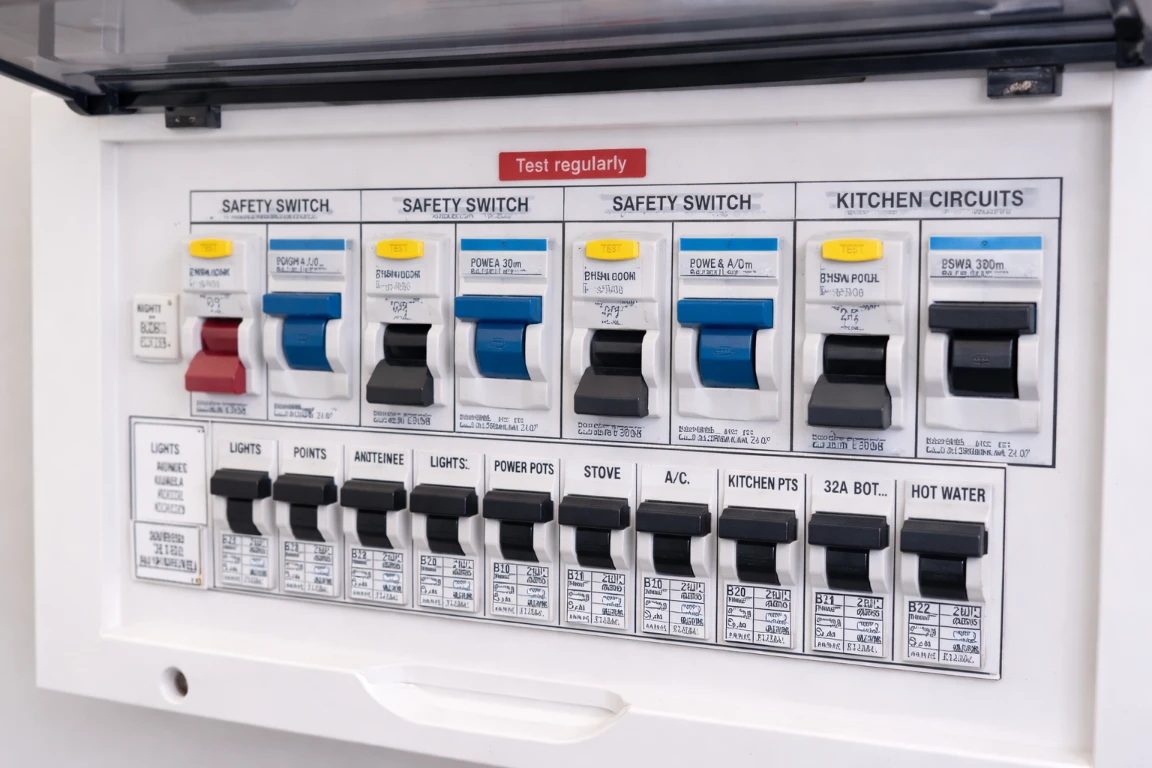
- AC Safety: AC is generally considered more dangerous at lower voltages because the alternating frequency can interfere with the human heart’s natural rhythm. This is why Australian wiring standards require safety switch (RCD) installation on all power and lighting circuits. These devices monitor the AC flow and cut the power in milliseconds if a leak is detected.
- DC Safety: DC is often used in extra-low voltage applications (like 12V garden lighting), which is much safer for DIY enthusiasts. However, high-voltage DC (like in solar arrays) is extremely dangerous because it can cause “continuous arcing,” which is a major fire risk if electrical maintenance is neglected.
Why the Future is Increasingly DC
While AC will likely always run our long-distance grids, our homes are becoming more DC-centric.
- LED Revolution: Traditional incandescent bulbs used AC. Modern LEDs are electronic components that prefer DC.
- DC Motors: High-efficiency appliances, like modern ceiling fans and premium air conditioners, now use “DC motors.” These are quieter, run cooler, and use significantly less electricity than older AC versions.
- USB-C Power Delivery: We are moving towards a world where wall sockets might eventually include high-powered DC USB ports as standard, eliminating the need for bulky AC adapters.
Maintenance and Professional Services
Because our homes now manage both alternating and direct current simultaneously, the complexity of our wiring has increased. Faulty rectifiers, failing inverters, or overloaded AC circuits can lead to expensive repairs or safety hazards.
Regular electrical safety inspections are the best way to ensure that your AC-to-DC conversions are happening safely and that your switchboard is capable of handling the modern load of EV chargers, solar systems, and high-tech appliances.
Powering Your Home Wisely
The battle of AC vs DC power didn’t end with Tesla and Edison; it simply evolved. Today, a comfortable, energy-efficient home requires a perfect balance of both. AC provides the muscle to move energy across the state, while DC provides the precision to power our digital lives.
By understanding how these two systems interact, especially when it comes to solar, batteries, and high-efficiency appliances, you can take control of your energy bills and ensure your home is ready for the technology of tomorrow.


