
Knowing how to install a battery in a smoke alarm correctly is one of the simplest yet most important steps you can take to protect your home and family. A smoke alarm is only effective if it has a working power source, and a flat or incorrectly fitted battery can leave you unprotected without you even realising it.
For many homes across Sydney’s Eastern Suburbs, especially older properties or rentals, battery-powered smoke alarms are still common. This guide walks you through the process safely and explains when it’s time to consider professional help.
Why a Properly Installed Battery Matters
Smoke alarms are designed to alert you early when smoke is detected, giving you precious time to escape. If the battery is loose, installed incorrectly, or expired, the alarm may fail when you need it most.
In NSW, smoke alarms are a legal requirement in all residential properties. While installing a battery may seem straightforward, doing it properly ensures the alarm works exactly as intended.
What You’ll Need Before You Start
Before installing a smoke alarm battery, make sure you have:
- The correct battery type recommended by the manufacturer
- A small step ladder if the alarm is ceiling-mounted
- A clean, dry cloth
- A few minutes to test the alarm once finished
Most smoke alarms use either a 9V battery or AA batteries, though some newer models have sealed lithium batteries that cannot be replaced.
How to Install a Battery in a Smoke Alarm (Step-by-Step)
Step 1: Turn Off Power (If Applicable)
If your smoke alarm is hardwired with battery backup, switch off the power at the circuit breaker before opening the unit.
Step 2: Remove the Smoke Alarm Cover
Twist or slide the alarm gently from its base. Some models require pressing a release tab. Never force it.
Step 3: Remove the Old Battery
Take out the old battery and check for corrosion or dust. If present, gently clean the contacts with a dry cloth.
Step 4: Insert the New Battery Correctly
Match the positive and negative terminals exactly as shown inside the alarm. Incorrect placement is a common reason alarms fail to work.
Step 5: Secure the Cover
Close the battery compartment and reattach the alarm to its base. Make sure it clicks firmly into place.
Step 6: Test the Alarm
Press and hold the test button until you hear a loud beep. If there’s no sound, recheck the battery orientation.
If you’ve followed these steps and the alarm still doesn’t work, the unit may need replacing or a professional inspection.
How Often Should Smoke Alarm Batteries Be Replaced?
As a general rule:
- Standard batteries should be replaced at least once a year
- Replace batteries immediately if the alarm chirps intermittently
- Smoke alarms themselves should be replaced every 10 years
Regular testing is just as important as replacement. A quick monthly test ensures the alarm is still responsive.
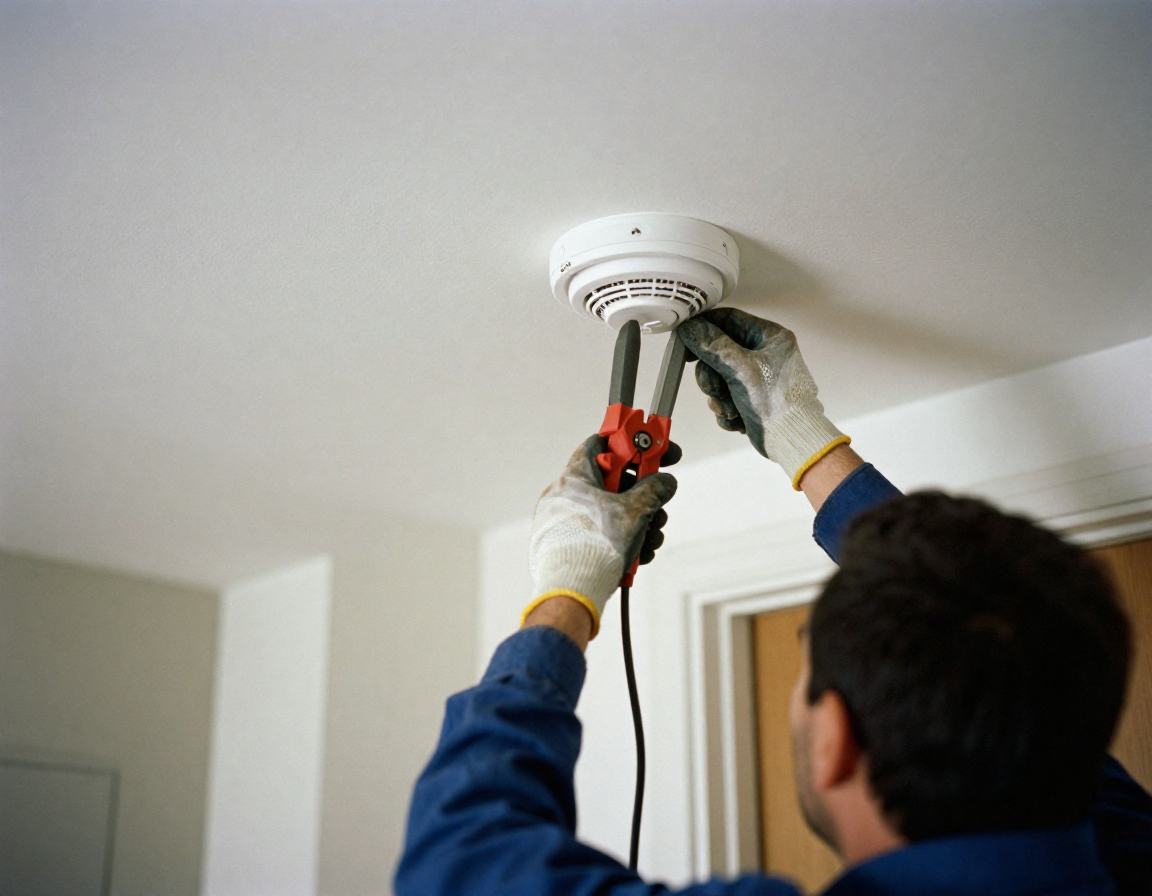
When Battery Installation Isn’t Enough
In many Eastern Suburbs homes, especially renovated or multi-level properties, battery-only alarms may no longer meet best-practice safety standards. Upgrading to hardwired alarms with battery backup improves reliability and compliance.
This is where professional smoke alarm installation becomes essential, particularly for landlords or homeowners preparing a property for sale or lease.
Common Mistakes to Avoid
- Using the wrong battery type
- Installing the battery backwards
- Forgetting to test the alarm
- Ignoring chirping sounds
- Keeping alarms past their lifespan
These small oversights can make a big difference in an emergency.