
Living in Sydney’s Eastern Suburbs offers an enviable lifestyle, from coastal views in Bondi and Coogee to heritage charm in Paddington and Woollahra. However, running a modern household in these iconic coastal and urban pockets often comes with a significant trade-off: rising power costs. Between summer air conditioning and winter heating, household energy consumption can quickly surge.
Investing in energy efficiency upgrades is one of the most effective ways to lower your daily power draw, enhance living comfort, and future-proof your property. Beyond immediate savings, energy-efficient home upgrades add long-term structural and market value to coastal properties, making them a smart choice for both owner-occupiers and property investors.
Here is a complete guide to the top energy-saving home improvements and electrical energy efficiency solutions tailored specifically for homes across Sydney’s Eastern Suburbs.
Why Energy Efficiency Matters in the Eastern Suburbs
Properties across the Eastern Suburbs present unique structural and microclimate challenges. Older Victorian terraces, Federation homes, and mid-century apartment blocks often feature original electrical infrastructure that was never designed to handle today’s heavy power demands. Furthermore, coastal humidity and salt air can cause older wiring and outdoor fixtures to degrade faster.
By focusing on home energy efficiency, homeowners can target the specific areas where electricity is wasted. Modernising your electrical system not only helps reduce electricity bills, but also reduces load on ageing switchboards, minimises safety hazards, and ensures your home meets modern energy performance standards.
1. Upgrade to Smart LED Lighting Systems
Lighting accounts for roughly 8 to 12 percent of an average Australian household’s electricity usage. Older halogen downlights are still surprisingly common in unrenovated Eastern Suburbs apartments and houses and consume vast amounts of power and generate excessive heat, increasing the load on your air conditioner during summer.
Key Benefits of LED Upgrades
- 80% Less Energy: High-efficiency LEDs convert almost all energy into light rather than heat.
- Extended Lifespan: Quality LEDs last up to 25,000 to 50,000 hours, significantly reducing maintenance.
- Smart Integration: Pairing LED systems with smart dimmers, motion sensors, and timers ensures lights operate only when needed.
Replacing halogen or incandescent bulbs with high-performance LED fittings is one of the simplest, high-yield energy efficiency upgrades available to homeowners.
2. Install Smart Energy Management Systems & Home Automation
A key factor in overall home energy efficiency is granular control over when and how your appliances draw power. Smart energy management systems provide real-time monitoring and automation to eliminate passive power draw (often called “phantom load”).
High-Impact Smart Upgrades
- Smart Thermostats: Learn your household schedule and automatically adjust heating and cooling settings to prevent unnecessary running.
- Automated Blinds & Shading: Program window coverings to close automatically during peak summer afternoon sun, keeping indoor temperatures cooler naturally.
- Smart Power Outlets: Schedule entertainment systems, computer setups, and chargers to switch off completely overnight.
Implementing these energy-saving home improvements gives you precise oversight of peak usage periods, allowing you to optimise appliance scheduling to match lower off-peak tariff rates.
3. Switchboard Upgrades & Modern Circuit Management
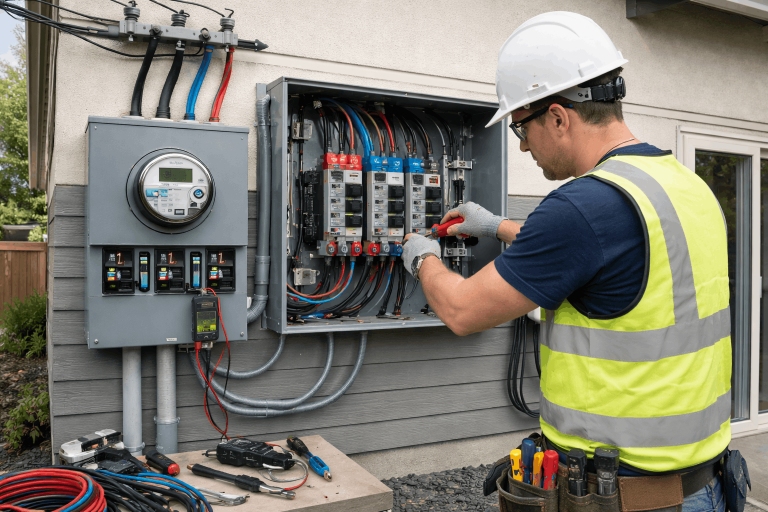
Your switchboard is the heart of your home’s power supply. Older fuse boxes and outdated switchboards in classic Eastern Suburbs homes often struggle with modern electrical loads. More importantly, outdated boards cannot efficiently distribute power from high-draw appliances or modern solar systems.
Why Switchboard Upgrades Support Efficiency
- Optimal Voltage Distribution: Modern circuit breakers prevent voltage drop and ensure appliances operate at peak electrical efficiency.
- Solar & Storage Readiness: Essential for integrating solar panels, battery systems, and dedicated EV chargers.
- Enhanced Safety: Modern Residual Current Devices (RCDs) protect against electrical faults while managing heavy load distribution safely.
Upgrading your switchboard is a foundational step in electrical energy efficiency, providing the infrastructure required to support future green technology.
4. Install Dedicated Electric Vehicle (EV) Chargers
With the rapid adoption of electric vehicles across Sydney, installing an efficient Level 2 EV charger at home is becoming a highly sought-after upgrade. Charging an EV using a standard 10A wall outlet is not only slow, but it can also be electrically inefficient over extended periods.
Advantages of Home EV Chargers
- Fast & Efficient Charging: Level 2 chargers supply up to 22 kW of power, significantly cutting down charging duration.
- Off-Peak Scheduling: Integrated software allows you to program charging strictly during overnight off-peak hours or direct excess daytime solar production into your vehicle battery.
- Increased Property Value: Homes in coastal and metro Sydney with dedicated EV charging infrastructure stand out in the property market.
An EV charging setup is an essential energy-efficient home upgrade for modern, tech-forward households looking to cut long-term fuel and power costs.
5. Upgrade Ceiling Fans & Optimise HVAC Wiring
Heating and cooling represent the largest portion of household energy consumption in Australia, often accounting for up to 40% of overall utility costs. While reverse-cycle air conditioners are essential during Sydney’s humid summer stretches, relying on them exclusively drives up power bills.
The Power of DC Ceiling Fans
- Ultra-Low Energy Draw: Direct Current (DC) ceiling fans use up to 70% less energy than standard AC fans.
- Winter Redistribution: Running ceiling fans in reverse at low speeds during winter pushes trapped warm air down from high ceilings, assisting heating efficiency.
- Hybrid Cooling: Running a DC fan alongside your air conditioner allows you to set the thermostat 2°C to 3°C higher without sacrificing indoor comfort, significantly cutting compressor load.
Ensuring your HVAC equipment is wired to dedicated circuits with smart controls guarantees peak operating efficiency year-round.
Key Comparison: Standard vs. Energy-Efficient Upgrades
| Upgrade Area | Standard Fixtures | Energy-Efficient Alternative | Estimated Savings Impact |
| Lighting | 50W Halogen Downlights | 6W-8W Smart LED Downlights | Up to 80% reduction in lighting energy |
| Cooling | AC Motor Ceiling Fans | Direct Current (DC) Ceiling Fans | Up to 70% reduction in fan power draw |
| EV Charging | 10A Standard Power Socket | Dedicated Level 2 EV Charger | Optimised off-peak charging & zero waste |
| Heating/Cooling Control | Manual Dial Thermostats | Smart Programmable Thermostats | 10-15% reduction in total HVAC costs |
Steps to Maximise Electrical Energy Efficiency
To get the highest return on investment from your upgrades, follow a structured approach to identifying and addressing energy waste:
- Conduct an Electrical Audit: Have a licensed electrician assess your home’s existing wiring, switchboard capacity, and phantom load draw.
- Prioritise High-Yield Quick Wins: Replace high-wattage lighting with LEDs and install smart timers or sensors on heavy-use circuits.
- Upgrade Core Infrastructure: Modernise your switchboard to accommodate solar power, battery storage, or EV charging systems safely.
- Automate Consumption: Integrate smart controllers to restrict high-load appliance use to off-peak tariff periods.
Investing in targeted energy efficiency upgrades systematically reduces household waste, protects against volatile energy price hikes, and creates a more comfortable, sustainable home environment.


