
Electric vehicles are not a distant idea anymore. They are already part of daily life across Sydney, particularly in the Inner West and Eastern Suburbs, where driveways and carports are steadily filling with charge cables instead of fuel hoses.
Charging at home is convenient. It’s also, in most cases, considerably cheaper than relying on the public network, and far more predictable. This guide walks through what actually happens before, during and after a home charging installation, and why the electrical work behind it deserves more attention than most people expect.
That includes what changes if your home was built before modern wiring rules came into effect, because that is often where the surprises turn up, along with the extra load an EV charger adds to a switchboard that may already be working hard.
Why EV Home Charging Is Becoming the New Standard
Public charging is improving year on year, but it still asks a lot of the driver. Availability varies by suburb and time of day. Charging speed depends on which network you use and how many other cars are plugged in ahead of you. A home charger sidesteps most of that.
Plug in when you get home, and the car is ready by morning. There’s no queue, no app that won’t load, and no guessing whether the charger at the shopping centre is actually working today.
For a typical commute of forty to sixty kilometres a day, an overnight charge easily covers what was used, with plenty of room to spare before the next trip. Over a year, that adds up to a real saving and more than just a convenience.
Understanding Your Home EV Charger Options
Before booking an installation, it helps to understand the setups most commonly used in Australian homes, and why one option usually beats the other.
Standard vs Dedicated Chargers
Some drivers start out by plugging into a normal power outlet, using the cable that came with the car, and this can work well enough from time to time. That said, a standard outlet is really designed for short, occasional loads, things like a kettle or a vacuum cleaner, rather than drawing current continuously for eight or ten hours at a stretch. Over time, that kind of sustained draw can overheat the outlet, wear down the wiring behind it, and in older homes, put real pressure on protection that was never sized for this kind of job.
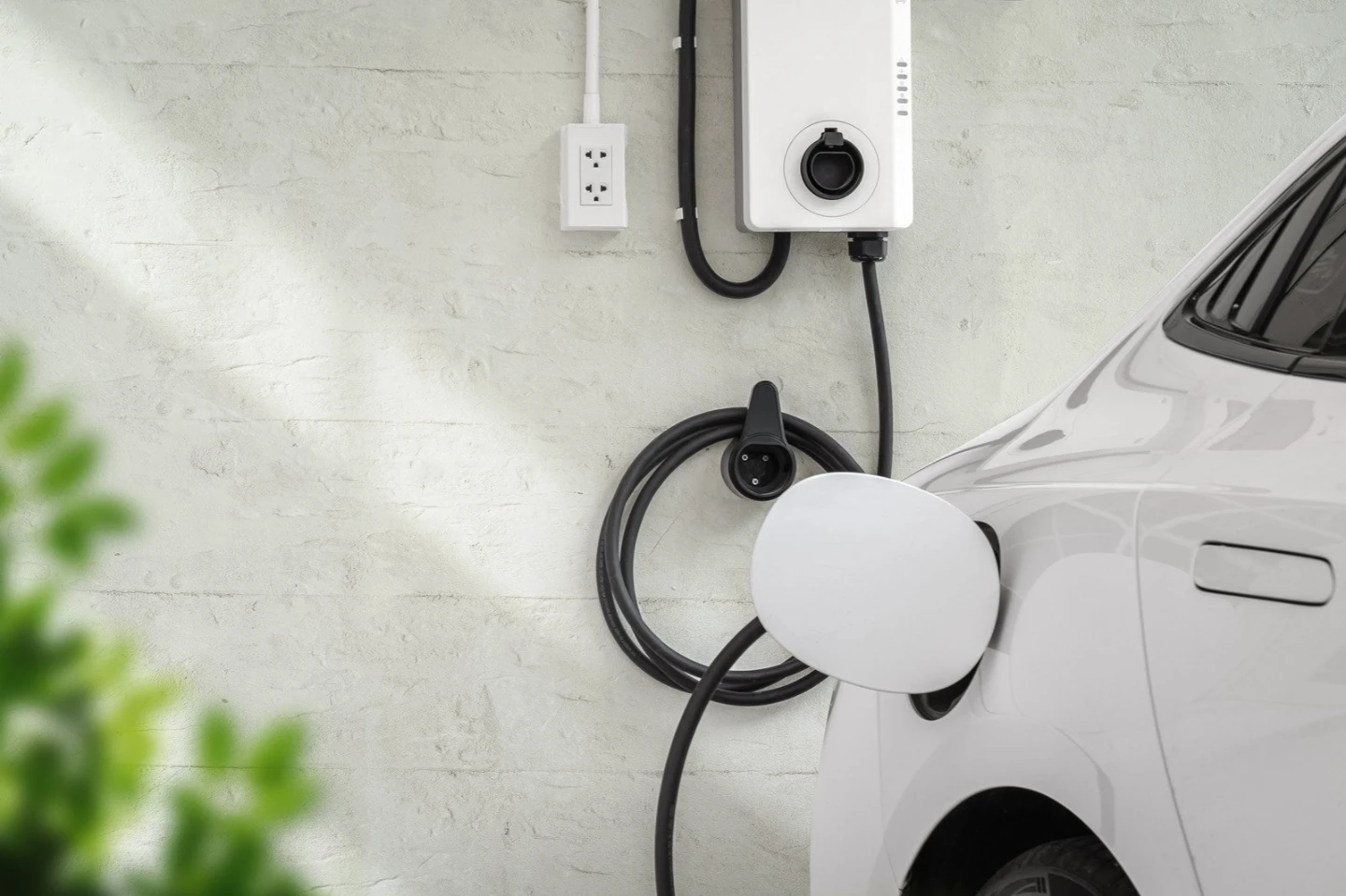
A wall mounted charger, wired on its own dedicated circuit, is built with exactly this kind of continuous use in mind. It charges faster, runs cooler, and gives you confidence that your existing electrical setup can comfortably handle it, night after night.
The Australian Government’s EV charging guidance provides further information on standard power point charging and dedicated home EV chargers.
Single Phase and Three Phase Charging
Most Sydney homes have single phase power, which is suitable for many residential EV chargers and everyday charging needs. Depending on the charger, vehicle and electrical supply, this can provide enough capacity to comfortably recharge an EV overnight.
Homes with three phase power may be able to support higher-powered charging, but the actual charging rate also depends on what the vehicle and charger can accept. Faster three phase charging is not always necessary, so a licensed electrician can assess your existing supply, switchboard capacity and charging requirements before recommending an upgrade.
Electrical Requirements You Should Check First
Many Sydney homes, particularly older properties built well before EVs existed, were wired for a much lighter load than a household draws today. Before any EV charger installation, a proper assessment of the existing setup should always come first. Skipping this step is where most problems start.
Switchboard Capacity
Older switchboards were typically sized for lighting circuits, general power points and perhaps an electric stove, not for a continuous seven kilowatt draw on top of everything else running in the house. An EV charger adds a significant electrical load to the home, so your existing switchboard and available supply capacity need to be assessed before installation. This is particularly important in older Sydney homes where the electrical system may not have been designed for the number of high-demand appliances now being used.
Your electrician will assess the charger load, available switchboard capacity, cable sizing and required circuit protection to ensure the installation complies with current electrical requirements and the charger manufacturer’s specifications. If the existing board cannot safely accommodate the additional load, a switchboard upgrade may be recommended before installation.
Safety Switch Protection
Your EV charger needs its own safety switch, one that only looks after that circuit and nothing else in the house. It can’t share with your power points or your lights, and here’s why that matters: an EV charger pulls power steadily for hours at a time, which is a much bigger and longer job than anything else plugged in around the house. If it shared a circuit, a fault somewhere else could cut its power, or the shared wiring could overheat from carrying more than it’s built for.
The rules say this safety switch has to be a certain type, called Type A, and rated to at least 30 milliamps. Some setups call for an even more sensitive version, called Type B.
What that means in everyday terms: if a fault develops, say a damaged cable or moisture getting into a connection, this switch cuts the power almost instantly, well before it has a chance to give someone a shock or start a fire.
Load Management
A home running ducted air conditioning, a pool pump, an induction cooktop and now an EV charger can place significant demand on the available electrical supply.. Dynamic load management systems can help by monitoring overall electricity demand and adjusting how much power the charger draws when other high-demand appliances are operating.
In some homes, this may help avoid unnecessary electrical supply upgrades while still allowing practical overnight EV charging.
These checks are typically completed as part of professional electrical maintenance and upgrade services, and they’re worth doing properly the first time rather than working around them later.
EV Installation Process Explained
Here is how we actually run the job, and it’s worth knowing the sequence even if we’re not the ones doing your install, because it tells you exactly what to check for when you’re hiring someone.
We start at the switchboard, not the charger.
Before any cable gets ordered, we inspect what’s already there, work out the best route to the charger location, usually a garage or driveway, and confirm what your particular vehicle and charger model actually need. Any switchboard or supply limitation gets flagged right here, before it becomes a problem halfway through the job. If an electrician skips straight from a phone call to a fixed price with no walkthrough of your switchboard, that’s a shortcut, not a saving, and it usually shows up later as an unexpected cost or a system that never quite performs.
The Dedicated Circuit
Once that assessment is done, we run a dedicated circuit from the switchboard to the charger, sized for both current carrying capacity and voltage drop over the actual distance involved. As a general rule, the longer that run, the larger the cable usually needs to be to stay within safe limits, and cutting that corner is one of the more common ways installations go wrong. Ask whoever you’re hiring what cable size they’re using and why.
For example, a charger installed in a detached garage may have different cabling requirements from one mounted only a few metres from the switchboard. This is why the electrical assessment and cable route need to be considered before installation begins.
Mounting and Testing
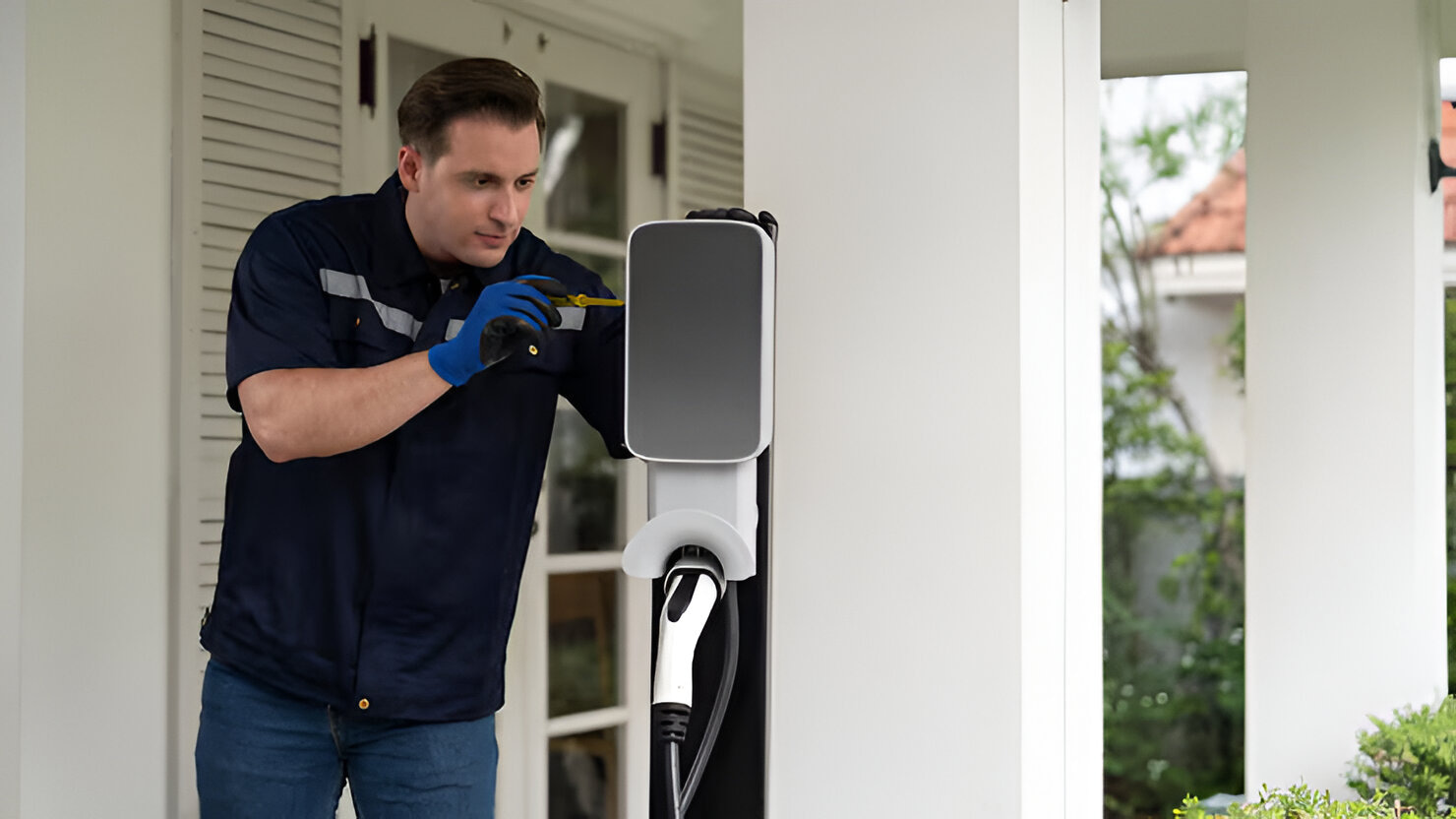
The charger is then securely mounted, connected and commissioned. Once installed, the electrician carries out the required electrical tests to confirm the circuit, earthing and protective devices are operating correctly.
This testing is an important part of the installation because it confirms that the charger is not only operating, but that the electrical system responds correctly if a fault occurs.
Certificate of Compliance for Electrical Work
Once the electrical work is complete and tested, the electrician must submit the required Certificate of Compliance for Electrical Work (CCEW). A copy can also be provided to the homeowner as documentation that the electrical work has been tested and certified.
Keep this documentation with the records for your home and EV charging equipment.
Safety and Compliance Matter
EV charging systems can place a high electrical load on a circuit for several hours at a time, which makes correct installation particularly important.
Incorrect cable sizing, poor connections or unsuitable circuit protection can create electrical safety risks over time. This is why EV charger installations should be completed by a licensed electrician who can assess the existing electrical system, install the appropriate circuit and protection, and test the finished installation properly.
Licensed electricians consider:
- cable sizing based on the charger requirements and installation conditions
- appropriate circuit and residual current protection
- safe and properly tested earthing
- testing and compliance documentation for the completed electrical work
Is Home EV Charging Worth the Investment?
For many EV owners in Sydney, home charging can be a practical investment, although the overall cost depends on your driving habits, charger choice and existing electrical setup.
Charging at home can be more convenient than relying on public charging because you can plug in overnight and start the next day with the vehicle ready to go. Depending on your electricity tariff and charging habits, home charging may also cost less than regularly using public fast chargers.
The upfront installation cost will vary from property to property. Homes that already have sufficient electrical capacity may only need the charger and dedicated circuit installed, while others may require additional work such as switchboard or supply upgrades.
A licensed electrician can assess your home and recommend a charging setup that suits your vehicle, electrical system and everyday driving needs.
Why Professional Installation Makes the Difference
Home charging looks simple from the outside. Plug in a box, run a cable, done. What actually sits behind a compliant installation is a proper load assessment, correct cable sizing, the right protection devices, and testing that confirms all of it works exactly as intended, not just on the day it goes in but for years afterward.
That’s the difference between a system that quietly does its job every night for the next decade, and one that turns into a recurring problem, or worse, a hazard nobody noticed until it was too late.


